Ask-the-expert: exploring the latest protein science for healthy ageing nutrition

Staying healthy as you age is crucial to getting the most out of life. Rather than focusing on living longer, many are focusing on living well – staying active, staying sharp and holding onto the things that bring them joy. In fact, 73% of consumers globally consider healthy ageing extremely or very important. This isn’t just a concern for older generations: while Boomers and Gen X tend to focus on staying physically active and socially connected, Millennials and Gen Z are increasingly factoring in appearance and emotional wellbeing too, showing that healthy ageing is now a lifelong consideration rather than one reserved for later life.
Innova Market Insights, Healthy aging trends across generations: global consumer insights, 2026.
Part of this is down to a rapidly ageing population. Virtually every country in the world is experiencing growth in the number and proportion of older people in their population. With more people living longer, many are looking at ways to make these extended years more enjoyable.
In fact, individuals’ approach to healthy ageing nutrition has become much more preventative in recent years – a shift we’re seeing reflected as one of the standout trends shaping nutrition in 2026. At the centre of that shift is protein. As the science matures, we’re discovering that it’s not just about how much protein older adults consume, but also the quality of the protein they consume – such as its amino acid profile and how easily the body can absorb and use it – and which formats and ingredients can deliver the greatest impact.
Jean Nyakayiru is at the leading edge of that research. His work spans muscle physiology, digestibility and the distinct functional properties of caseinates and whey protein ingredients – including findings that are reshaping how the industry thinks about ingredients for healthy ageing nutrition. We sat down with Jean to explore what the latest science means for product developers and brands working in this space.
Jean Nyakayiru
Senior Scientist in protein, muscle and metabolism at FrieslandCampina Ingredients
Hi Jean! Can you start by telling us about your role as a Senior Scientist?
My work focuses on understanding how proteins affect muscle health and physical function in adults as they age – and how different protein types perform in both adult and medical nutrition contexts. Age-related muscle loss – sarcopenia – becomes more prevalent as people get older, and it’s one of the areas where performance and active nutrition can make a huge difference.
I’m looking into how muscle responds to anabolic stimuli as we age, by defining new study areas and collaborating with external researchers to uncover how we can help people age better. It’s fascinating to see these findings come to life to help inform our thinking around ingredients, dosing and format in real product development
What inspired you to focus your research on proteins and healthy ageing?
Proteins are fundamental to many processes and tissues in the body – from enzymes to bone and muscle. And yet, as we age, our ability to maintain those structures starts to change. Physical activity tends to decline, dietary habits often change and the body doesn’t respond to nutrition and exercise in the same way it did earlier in life. That’s why finding out more about what protein can do and how the body can use it more effectively is such a compelling research area.
We know that ageing is linked to a gradual decline in muscle mass and function, with knock-on effects on movement as well as metabolic health. Maintaining muscle mass is key not just for being able to lift a bag of groceries, but also for regulating glucose levels and burning calories during rest. What continues to evolve is our understanding about how exercise and dietary protein are two of the most powerful tools we have to slow that decline – and understanding how to optimise both is what drives my research.
So, what are some of the key questions researchers are now trying to answer when it comes to healthy ageing nutrition?
There’s a lot happening. Anabolic resistance – the reduced responsiveness of older muscle to the stimuli that normally trigger growth and repair – has been getting a lot of attention, but nobody has cracked the code yet. For a long time, the conversation centred around protein quantity: are older adults eating enough? That question is still relevant, but quality is becoming a significant focus now too.
Older adults often struggle to meet their recommended protein intake because appetite declines with age. So, if the amount is challenging to achieve, the quality of what they do consume needs to be as high as possible. We’re also seeing that people in their 50s, not just their 70s, are starting to think about maintaining their physical performance, and that’s widening the healthy ageing nutrition research agenda significantly.
And what does that mean at a physiological level? What’s actually happening to muscle protein synthesis as we age?
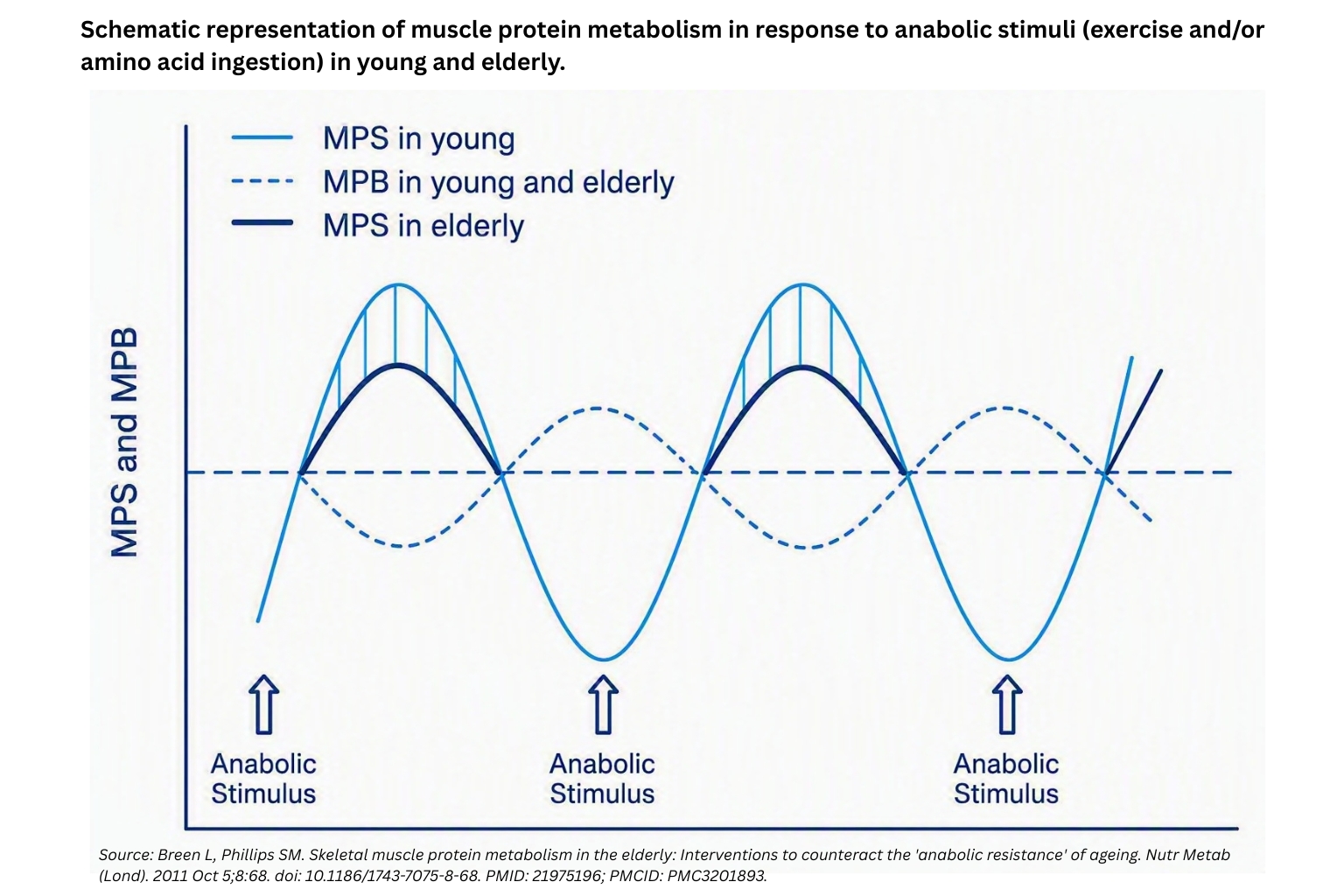
As we age, muscles become less responsive to the two key anabolic stimuli: exercise and protein. The threshold for triggering an effective response rises, which is why protein requirements differ between younger and older adults. We now know that older adults need to consume more protein per kilogram of body weight per day than younger adults. When appetite limits how much protein someone can realistically consume, a complete, highly digestible source is going to deliver better outcomes, especially when the amino acid profile closely matches the body’s needs.
Interesting. So which type of protein wins out for seniors – whey protein ingredients or caseinates?
It’s not really a competition – they each bring something different to the table. Whey protein ingredients are fast-digesting with a high leucine content, making them a powerful trigger for muscle protein synthesis. Caseins digest more slowly but produce a comparable overall effect – and the casein protein benefits extend to a marginally higher DIAAS score (the globally recognised standard for evaluating dietary protein quality), reflecting an amino acid composition that maps very closely to the body’s ideal requirements.
For older adults, both are effective; the choice comes down to whether speed of response or sustained amino acid release is the priority for a given application. A wellness shot, for example, would be a good format for consuming a whey boost on the go during the day, while a casein-rich pudding is ideal for prolonged protein recovery in the evening and throughout the night.
We’ve talked about the importance of protein quality, but what are some of the barriers manufacturers need to overcome when developing protein-rich products for this age group?
One of the key challenges is making sure protein-rich products are not only nutritionally effective, but also palatable and easy to consume consistently. Drinks are an ideal format because they are easy to consume, not too filling, and allow for nutrient-dense delivery in a relatively small volume, which is important for older adults with reduced appetite. But developing these formats can become challenging when high levels of whey protein are included. That’s where microparticulated whey protein can help.
Nutritionally, microparticulated whey protein is equivalent to standard whey – same amino acid profile, same quality. The difference here is functional. Standard whey gels under heat treatment, which can cause a thick texture that’s difficult to swallow – not ideal for seniors.
Microparticulated whey protein, on the other hand, is heat stable, so it’s a practical choice for convenient, ready-to-consume products. Its smooth, neutral mouthfeel can help make a product easier to drink, which makes seniors more likely consume it. That’s also why we often recommend medical nutrition manufacturers use microparticulated whey in nutrition solutions for patients with difficulty swallowing. It allows patients to access all the benefits of whey protein in a nutrient dense liquid formulation, which can help with patient adherence.

Your research has uncovered some surprising findings about casein too. What did you discover – and why does it matter for healthy ageing formulations?
Most people assume all caseins behave the same way, but our research shows that’s not the case. While micellar casein and calcium caseinate indeed take longer to digest, sodium caseinate produces a rapid amino acid response much closer to whey. For healthy ageing formulations, that distinction is really valuable.
Older adults have varying nutritional needs depending on the time of day and their activity levels, whether that’s a fast-digesting protein to support post-exercise recovery, or a sustained release option like calcium caseinate to maintain amino acid availability. Understanding that caseins can deliver both profiles gives manufacturers much more flexibility to target specific needs within the healthy ageing population.
Finally, zooming out, where do you see healthy ageing nutrition heading over the next five years?
Protein is already mainstream – and we’re going to see this accelerate. What started in sports nutrition is reaching far broader audience. Seniors are definitely taking notice of high-protein products now, which is exciting, and opens up lots of new opportunity in healthy ageing nutrition NPD.
Focus on protein quality and composition is also rising. As consumers encounter more protein sources in their everyday foods, questions around amino acid completeness and digestibility will become more prominent. The data on casein’s amino acid completeness, and our new understanding of how different casein types behave, show that older adults could really benefit from whey and casein together as complementary rather than competing ingredients. In fact, the cumulative effect of combining fast and sustained release proteins to maintain amino acid availability across the day is something I expect to see a great deal more research into.
I’d also expect that the complementary ingredient approach will extend beyond amino acids and gut health. We’re already seeing that with Fermentis, our all-in-one fermented formulation combining whey protein with GOS prebiotics and probiotic cultures. It’s built for active nutrition today, but the same logic, pairing protein quality with how well the body actually absorbs and uses it, is exactly the kind of thinking I expect to shape healthy ageing NPD over the next five years. Watch this space!
Interested in exploring how our whey protein ingredients and caseinate portfolio can support your healthy ageing nutrition formulations?
First look: the 2026 nutrition trends you need to know
Read more5 GOS prebiotic benefits for holistic health
Read more
Stay up to date
Subscribe to our newsletter
For more than a century we’ve been creating quality ingredients delivered with passion. Whether we’re inspiring ideas from drinks to bars, or supporting how to manufacture products in better ways, our customers can count on us to deliver, time and time again.
Subscribe